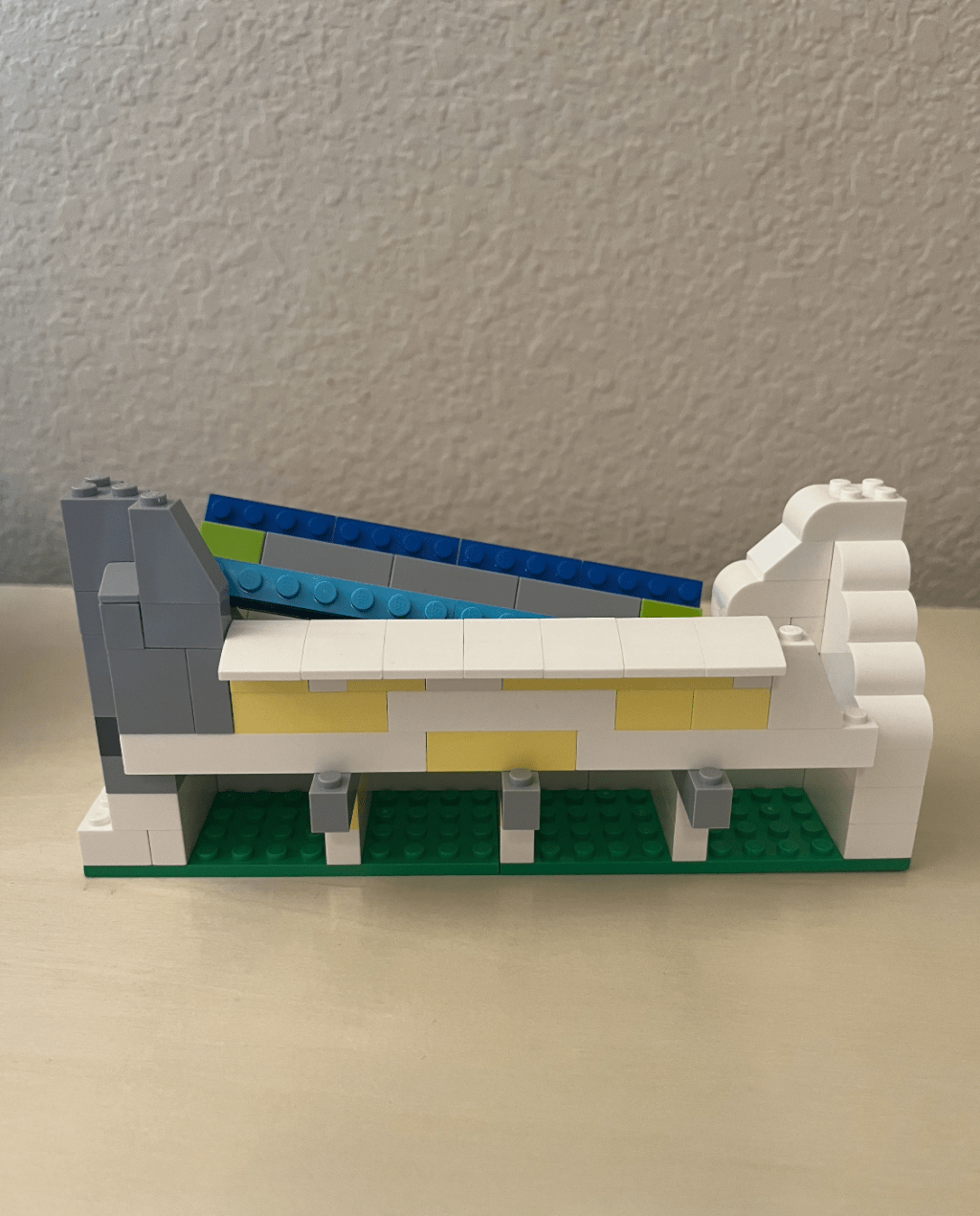

I have been drawn to collecting both coins and LEGOs since I was a kid. I became fascinated with collecting various coins such as the 50 State Quarters, America the Beautiful, and the American Women Quarters collection. Over the years, I have also developed a deeper appreciation for the engineering, design, and creativity that goes into ready-made LEGO sets. While following instructions is fun and relaxing, it’s the freedom of building without them that lets me get truly creative and make something that’s both enjoyable and functional. I combined these two interests into one fun project: a LEGO coin sorter.
The coin sorter that I built works by using the force of gravity and different slot sizes to sort coins into different compartments. As coins are put in the sorter, they slide down an angled plate with different sized holes. The smaller coins will fall through first, while the bigger coins fall through later. In my sorter, the coins are sorted in this order: dimes, pennies, nickels, and then quarters.


When it came time to put my ideas into LEGO form, I encountered some issues with the bricks I had available, as I was pretty limited in the pieces I had. For example, in order to properly slant and angle the plate that the coins slide down on, I had to modify my original idea to function with the spare pieces I had. I decided to angle the plate twice, using one mechanism that angled up and down, and another that went forward and backward. These two motions are crucial in my design as they need to be at exactly the right angle to allow the coins to slide smoothly. The angled plate also included holes that ranged from being small enough for only a dime to fit through, to being large enough at the end for the quarters to fall through. The base of my design consists of four compartments that are lined up so that the coins can be collected there. I also built walls around the compartments to ensure a more controlled and stabilized sorter.

Building this coin sorter was not only a fun project, it also gave me a deeper understanding of engineering principles. One such principle is the importance of an iterative design process. My first version of the sorter wasn’t very functional or elegant, but as I refined my ideas and rebuilt, my vision slowly took shape. I really enjoyed being able to combine my love for coins, LEGO, and engineering into a fun and useful project.
 Keys to Knowledge